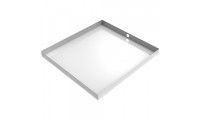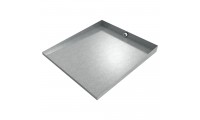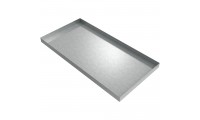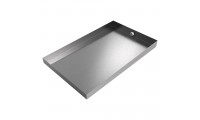


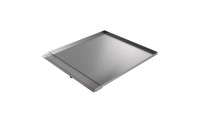
When designing a drain pan there are a number of different aspects of the drain
pan requirement to keep in mind. This purpose of this resource is to highlight several
of these “keep in mind” items for your next drain pan design project.
Drain Pan Footprint
Is your drain pan footprint large enough to do the containment job you need while
fitting in the space provided. Killarney Metals drain pans will have straight walls
so the base of the pan will be as large as the top.
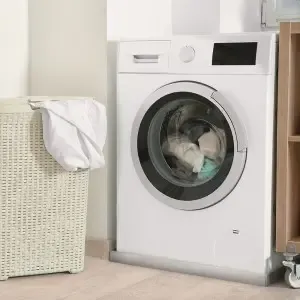
If a piece of equipment like a washer or gearbox is going to sit in the drain pan
make sure that the pan will hold the equipment. You want your equipment to sit flush
on the floor of the drain pan without resting on the walls of the pan.
Drain Pan Wall Height
Make sure to consider the wall height of your drain pan. If you will be using the
pan with a piece of equipment, like a front opening clothes washing machine, inside
the pan you will want to make sure that the wall height does not interfere with
the operation of the door. It is also good to consider access for maintenance purpose
on your equipment when designing a drain pan.
Drain Hole Placement (Side)

When designing a drain pan make sure that you are clear on what side of the pan
you would like the drain hole placed. This is particularly important if your drain
pan sides are different lengths. You want the orientation of the drain hole and
the drain pan to be as you intend. Check the drain pan approval drawing carefully
before production to make sure that the drain pan is exactly as you desire.
Drain Hole Sizing
If you are designing a drain pan you will likely be draining the pan into something
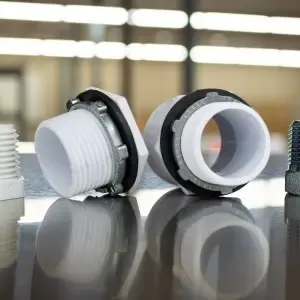
like a discharge pipe. Check the size of your fitting and make sure that it will
work with the drain hole size you intend to put in your drain pan. You will want
to make the drain hole slightly larger than the drain fitting and remember to account
for the threading that will fit through the drain hole.
Drain Hole Placement (Height)
Unless you intend to pump the contents of your drain pan out of the pan you will
need to allow gravity to cause it to flow through the drain hole and down in the
discharge pipe. Make sure when you consider the location of the drain hole in your
drain pan that you have the height of the hole placement high enough to allow for
the content to flow. For example, a washer drain pan with a drain hole lower than
the height of the hole where the discharge pipe enters the wall will likely fill
before the water is able to fill the discharge pipe. If the drain hole is higher
than the discharge pipe than the liquid will naturally flow down the pipe as it
reaches the drain hole level.
We hope that you will find this drain pan design resource useful for your drain
pan requirement. As always the experts here at Killarney Metals stand ready to help
when needed. If you have any questions, please contact us at 704-981-1812 or email
us at sales@killarneymetals.com.
Visit our drain pan product page for more info on Killarney Metals – No Leak Guaranteed
Drain Pans –
Galvainized Drip Pans